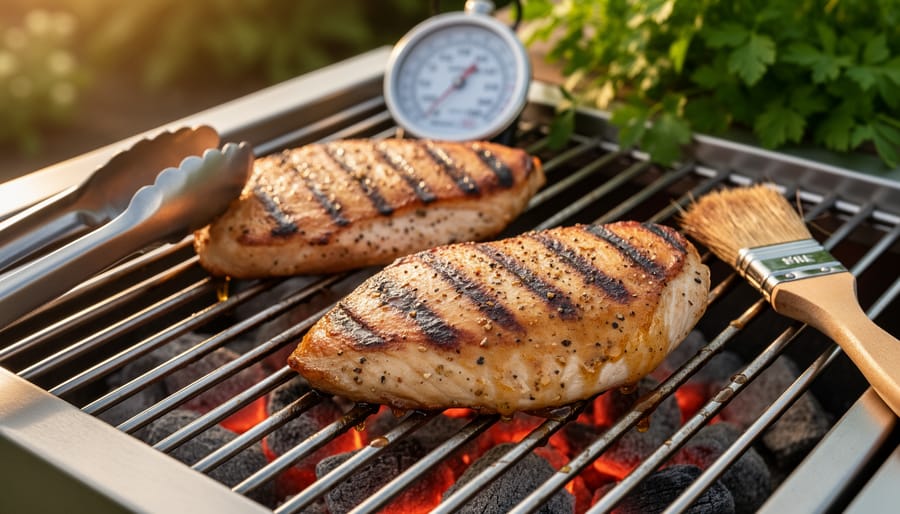
Preheat your grill to medium-high heat (around 425-450°F) and oil the grates to prevent sticking. This temperature range creates beautiful char marks while giving you enough control to cook chicken breasts through without burning the exterior.
Pound your chicken breasts to an even thickness of about three-quarters of an inch before seasoning. This simple step solves the biggest problem with grilling chicken: uneven cooking that leaves thick portions undercooked while thin ends dry out. A meat mallet or heavy skillet works perfectly for this.
Season generously with salt at least 15 minutes before grilling, which allows the meat to absorb moisture and flavor. You can keep it simple with just salt, pepper, and olive oil, or experiment with dry rubs and marinades. For those exploring wellness-focused cooking in 2026, consider incorporating anti-inflammatory spices like turmeric and paprika into your rub.
Grill for 6-8 minutes per side, flipping only once. The single-flip method keeps those coveted grill marks intact and prevents moisture loss from constant prodding. Your chicken is safely done when it reaches an internal temperature of 165°F, measured at the thickest part with an instant-read thermometer.
Let the meat rest for 5 minutes after grilling. This allows juices to redistribute throughout the chicken rather than spilling onto your cutting board. The result? Tender, juicy chicken breast that rivals any restaurant, packed with lean protein and perfect for meal prep throughout your week.
Why Chicken Breast Dries Out on the BBQ (And How to Prevent It)
Chicken breast is lean by nature, containing very little fat or connective tissue to buffer it against the intense heat of a grill. When you place that breast over open flame or hot coals, the muscle fibres contract rapidly, squeezing out moisture like wringing a wet sponge. The longer it stays on the heat, the more water evaporates and the drier it becomes. This is simple biology: muscle proteins tighten and expel liquid as temperature climbs, and once that moisture is gone, no amount of sauce can bring it back.
Most home cooks make one of three mistakes. They cook over direct, high heat for too long, treating the breast like a steak. They flip constantly or press down with a spatula, breaking the crust and releasing precious juices. Or they guess at doneness, cutting into the meat repeatedly or pulling it off too late, well past the safe internal temperature of 74°C (165°F) required by Canadian and FDA guidelines. Each error compounds the problem, turning what should be tender protein into something dry and chewy.
Restaurant kitchens prevent this through technique, not luck. They use two-zone grilling, searing the breast over high heat for colour, then finishing it gently on the cooler side of the grate. They brine or marinate to add moisture before cooking starts. They rely on an instant-read thermometer rather than intuition, pulling the meat the moment it reaches 74°C and letting carryover heat finish the job off the flame. These aren’t trade secrets. They’re straightforward methods that anyone can apply at home with a little attention to temperature, timing, and preparation.
Preparing Your Chicken: Marinades and Rubs That Add Flavor and Moisture
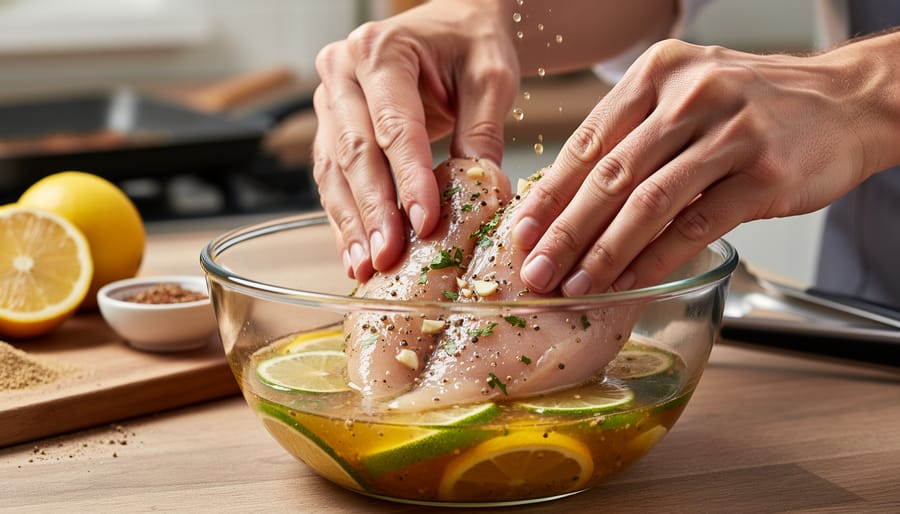
Cloud 9’s Signature Wellness Marinade
This marinade balances flavour with anti-inflammatory benefits, making it ideal for health-focused grilling. Combine a quarter cup of avocado oil (rich in heart-healthy monounsaturated fats), juice of one lemon, three minced garlic cloves, one teaspoon of turmeric, half a teaspoon of black pepper, and a pinch of sea salt. Whisk until emulsified, then add one tablespoon of fresh rosemary or thyme. For those exploring wellness-enhanced cooking, stir in 10-15 mg of food-grade CBD oil after whisking, the oil’s potential anti-inflammatory properties complement turmeric’s benefits, though research is still emerging.
Coat your chicken breasts thoroughly and refrigerate for two to four hours. The avocado oil helps the marinade penetrate the meat while creating a protective barrier during grilling, locking in moisture. Avoid marinating longer than six hours, as the lemon’s acidity can break down the protein texture. This recipe covers four chicken breasts and costs roughly five dollars using pantry staples, with the optional CBD addition adding three to five dollars depending on your source. The result is tender, flavourful chicken that aligns with both wellness goals and budget-conscious meal planning.
Quick Dry Rub for Weeknight Grilling
When time is tight and you want to eat healthily on a budget a dry rub is your solution for weeknight BBQ chicken breast. Combine two tablespoons smoked paprika, one tablespoon garlic powder, one tablespoon onion powder, two teaspoons black pepper, one teaspoon cumin, and one teaspoon sea salt in a jar. This mix costs under five dollars and seasons chicken for multiple meals throughout the week. Apply the rub generously to both sides of room-temperature chicken breasts fifteen minutes before grilling, allowing the spices to form a flavorful crust during cooking. Store the blend in an airtight container for up to three months, making it ready whenever you fire up the grill.
Setting Up Your BBQ for Perfect Chicken Every Time
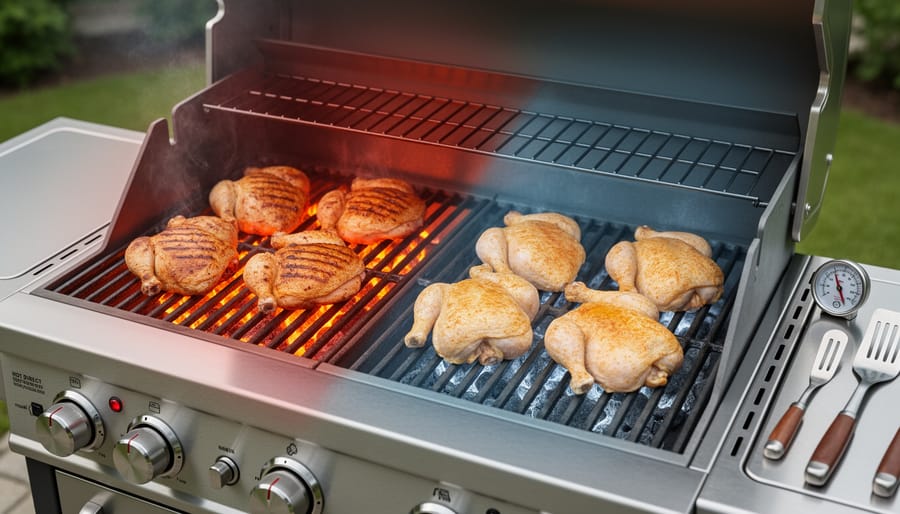
Your BBQ setup determines whether you’ll serve juicy, evenly-cooked chicken or a charred-outside, raw-inside disaster. Professional kitchens rely on the two-zone method, which creates distinct temperature areas on the grill. This technique gives you control that single-zone cooking simply can’t match.
Gas grills offer convenience and precise temperature control, making them ideal for weeknight grilling when you’re juggling multiple tasks. Charcoal grills deliver that smoky depth restaurant chefs love, though they require about 20 minutes more prep time. Either works beautifully for chicken breast if you set them up correctly.
- Clean your grates thoroughly with a wire brush while they’re still warm from preheating, removing any residue that could cause sticking or off-flavors.
- Preheat your grill to medium-high heat, around 200°C to 230°C (400°F to 450°F), allowing at least 15 minutes for gas or until charcoal develops white ash.
- Create two distinct zones by arranging coals on one side only for charcoal grills, or turning burners to high on one side and medium-low on the other for gas grills.
- Oil the grates just before cooking by dipping folded paper towels in a neutral oil like avocado or canola, then gripping them with tongs and rubbing across the hot grates.
The hot zone handles the initial sear that locks in surface moisture and creates appealing grill marks. The cooler zone allows the interior to reach that critical 74°C (165°F) without burning the exterior. This two-step approach mirrors how Cloud 9’s kitchen manages proteins during dinner service.
Most home cooks skip the oiling step, then wonder why their chicken tears when they flip it. A well-oiled grate creates a non-stick surface that also promotes even browning. You’ll use both zones during the cooking process, starting hot to develop flavor, then moving to the cooler side to finish gently.
The Grilling Process: Temperature, Timing, and Technique
Start with your chicken at room temperature for even cooking. Preheat your grill to medium-high heat, around 230°C (450°F), creating two zones as outlined earlier. Place the chicken breasts presentation-side down over direct heat first. You’ll hear a satisfying sizzle that signals protein contact with hot grates.
Sear each side for 3-4 minutes without moving the chicken. Resist the urge to flip multiple times. That initial sear locks in surface moisture and creates appealing grill marks. After searing both sides, move the breasts to your indirect heat zone. This transition prevents the outside from charring while the interior finishes cooking.
Close the lid to maintain consistent temperature. Your grill becomes an oven at this stage, circulating heat around the meat. Check after 5-6 minutes, but timing varies with breast thickness. A thermometer is only way to verify doneness accurately.
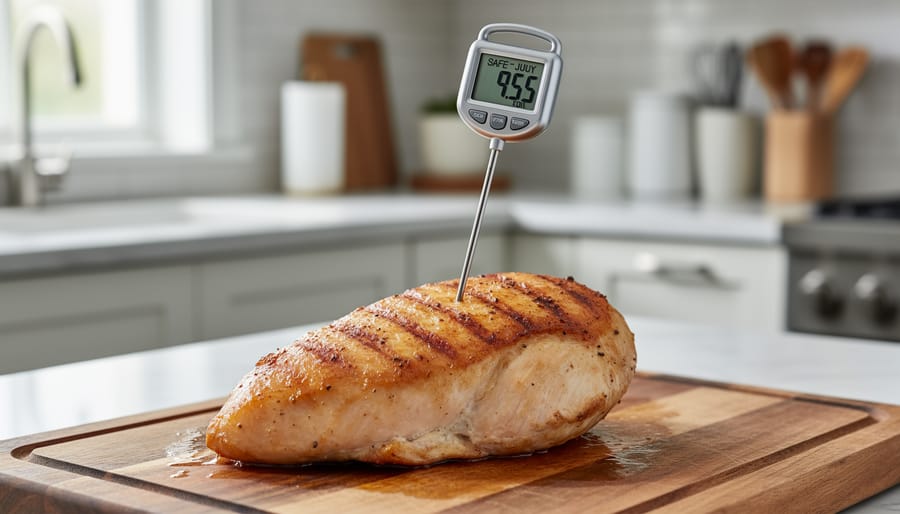
Insert the probe into the thickest part of the breast, avoiding contact with bone if you’re grilling bone-in pieces. The target is 74°C (165°F), the minimum safe internal temperature established by both Canadian food safety authorities and the FDA. Pulling chicken at 71°C (160°F) works too, since carryover heat will bring it to temp during rest, but never go below that threshold.
Don’t judge doneness by colour alone. Some chicken remains slightly pink near the bone even when fully cooked, while overcooked breast can look perfectly white. Temperature removes the guesswork and prevents both food safety risks and the common mistake of overcooking lean meat into dry, stringy texture.
Keep the lid closed between checks. Each time you open it, you lose heat and extend cooking time. If one breast reaches temperature before others, remove it immediately. Different sizes finish at different rates, and there’s no benefit to keeping cooked chicken on heat.
Testing for Doneness Without Guessing
A food thermometer is your only reliable method to confirm doneness when cooking chicken breast on BBQ. According to both Health Canada and the U.S. Food and Drug Administration, chicken must reach an internal temperature of 74°C (165°F) to be safe for consumption. Guessing based on time alone risks serving undercooked chicken that can harbor harmful bacteria, or overcooked, rubbery meat that defeats the purpose of your careful preparation.
Insert your thermometer into the thickest part of the breast, angling it horizontally so the probe sits in the center of the meat. Avoid touching bone or pushing the probe all the way through to the other side, as both give false readings. For split breasts, check the thickest portion near where the bone was removed. Take readings from multiple breasts if you are grilling several pieces, since size variations mean different cooking times.
| Temperature Range | Texture | Safety & Quality |
|---|---|---|
| Below 74°C (165°F) | Raw to partially cooked center | Unsafe; risk of foodborne illness |
| 74°C (165°F) | Juicy, tender, fully cooked | Safe minimum; optimal texture |
| Above 80°C (176°F) | Dry, stringy, tough | Safe but overcooked; moisture loss |
Visual cues work only as secondary indicators once you have grilling experience. Properly cooked chicken shows clear juices when pierced, and the meat turns opaque white throughout with no pink remaining. The flesh feels firm but still springs back slightly when pressed. These signs can help you recognize when to check the temperature, but they cannot replace an actual reading. At Cloud 9, we train cooks to trust the thermometer first and confirm with visual checks second, ensuring every piece meets both safety standards and quality expectations without the guesswork that leads to inconsistent results.
Finishing Touches: BBQ Sauce Application and Serving
Sauce should go on during the final two to three minutes of grilling, not before. High heat will char the sugars in most BBQ sauces, leaving you with a bitter, burnt coating instead of that glossy finish you see in restaurants. Pull your chicken from direct heat once it hits 74°C (165°F), brush a thin layer of sauce on both sides, then return it to the cooler zone of the grill for a quick set. This technique, borrowed from Memphis BBQ tips creates a caramelized glaze without the char.
For serving, pair your grilled chicken with sides that support your wellness goals rather than undermine them. Grilled vegetables like zucchini, bell peppers, and asparagus pick up smoky flavor from the same grill. A fresh quinoa salad with lemon vinaigrette adds plant-based protein and fiber. Cauliflower rice pilaf works well for lower-carb meal plans, while a simple mixed green salad with avocado keeps things light and nutritious.
Cloud 9’s plating approach emphasizes color contrast and height. Slice the chicken breast on a bias to show off the juicy interior, then fan it over your grain or greens. A small dish of extra sauce on the side lets diners control their portions. Add a citrus wedge and fresh herbs like cilantro or parsley for visual appeal. If you’re hosting, consider pairing with refreshing milk frother drinks that complement the smoky flavors without adding empty calories.
Nutritional Benefits of Grilled Chicken Breast
Grilled chicken breast stands out as one of the leanest protein sources you can include in your diet, delivering roughly 31 grams of protein per 100-gram serving with minimal saturated fat. When you cook chicken breast on the BBQ instead of pan-frying or deep-frying, you eliminate the need for added cooking oils, keeping the calorie count low while preserving the natural flavor and nutrients. This makes it an excellent choice for anyone tracking macros for fitness goals or following Canada’s Food Guide emphasis on lean proteins in 2026.
The dry-heat cooking method also helps render out any residual fat while creating those desirable grill marks, giving you a satisfying meal that supports muscle recovery and sustained energy throughout the day. Because grilled chicken is so versatile and nutrient-dense, it pairs well with complex carbohydrates and vegetables for balanced meal prep that can fuel your workouts and even complement sleep-problem foods when you’re planning evening meals. The high protein content promotes satiety, which can help with weight management while meeting your wellness targets without sacrificing taste.
Mastering cooking chicken breast on bbq at home doesn’t require a professional kitchen or years of culinary training. With the techniques you’ve learned here, proper marinades, two-zone heat management, and hitting that critical 74°C internal temperature, you can consistently achieve tender, juicy results that rival any restaurant. The wellness-focused methods we use at Cloud 9, from anti-inflammatory marinades to economical meal planning with pantry staples, make it easy to enjoy nutritious grilled chicken that supports your health goals. Try these approaches on your next backyard cookout, experiment with the optional CBD-infused variations if wellness-enhanced cooking interests you, and explore our other recipes for more ways to bring restaurant quality into your everyday meals.