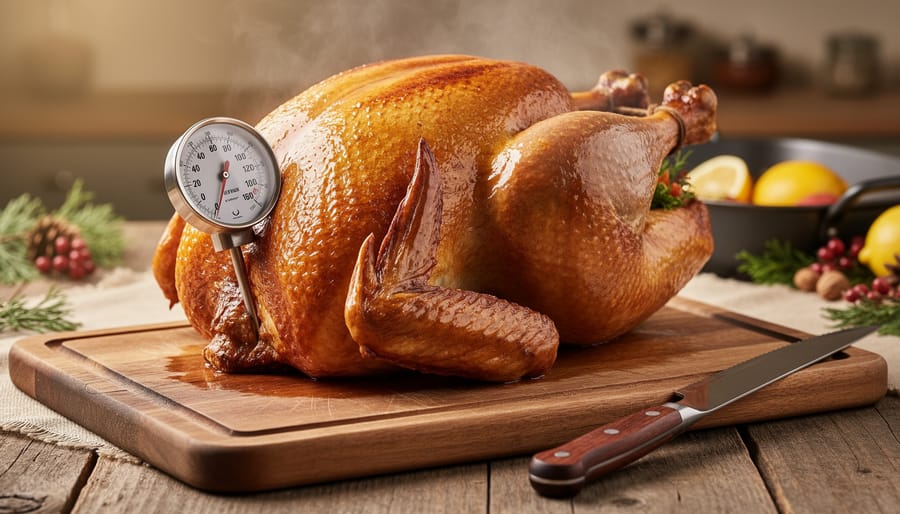
Calculating turkey cooking time comes down to a simple rule: plan for approximately 15 minutes per pound for an unstuffed bird roasted at 350°F, reaching an internal temperature of 170°F. This timing framework ensures your turkey emerges from the oven golden, juicy, and safe to serve, whether you’re hosting a small gathering or preparing a holiday feast for family and friends.
Getting the timing right matters more than almost any other element of turkey preparation. Undercook it and you risk foodborne illness. Overcook it and you’re left with dry, disappointing meat that no amount of gravy can rescue. The challenge is that turkeys vary dramatically in size, from compact 8-pound birds perfect for intimate dinners to massive 20-pound centerpieces that feed a crowd. Each pound adds roughly 15 minutes to your total roasting time, though stuffed birds require an additional 40 to 60 minutes overall and must reach 180°F internally.
Beyond the basic calculation, successful turkey preparation demands attention to oven calibration, proper thawing schedules, and resting periods that allow juices to redistribute throughout the meat. Many home cooks also overlook the importance of starting with a completely thawed bird, a mistake that throws off every timing estimate and can leave you scrambling on the day of your event. This guide breaks down the precise timing for every turkey size, walks you through the essential steps from preparation to carving, and provides the verification methods you need to confirm your bird is perfectly cooked and ready to serve.
What You’ll Need to Roast the Perfect Turkey
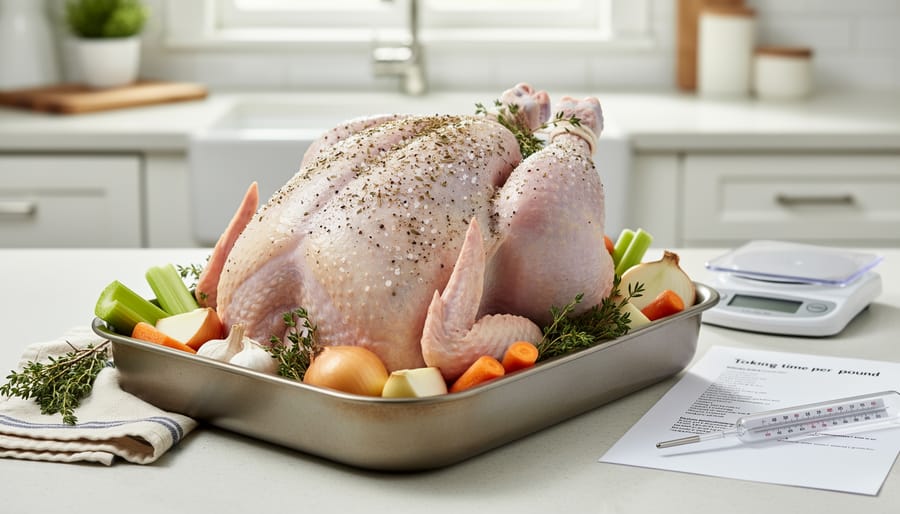
Roasting a perfect turkey starts with gathering the right tools. You don’t need a kitchen full of specialized gadgets, but a few key pieces of equipment will make the process smoother and help you achieve juicy, evenly cooked results.
Start with a sturdy roasting pan large enough to hold your turkey comfortably, ideally with a removable rack that elevates the bird and allows heat to circulate underneath. This setup promotes even cooking and creates beautifully crisp skin all around. A meat thermometer is non-negotiable, whether you choose a digital probe thermometer or an instant-read model, it’s the only reliable way to confirm your turkey has reached the safe internal temperatures of 170°F for unstuffed birds or 180°F when stuffed.
Here’s your essential checklist:
- Roasting pan with removable rack (at least 2 inches deep)
- Meat thermometer, digital probe or instant-read
- Heavy-duty aluminum foil for tenting
- Basting brush or bulb baster
- Kitchen twine for trussing
- Oven mitts rated for high heat
Beyond the basics, consider wellness-focused additions that align with healthier cooking approaches. Herb-infused olive oil or avocado oil makes an excellent basting alternative to traditional butter, adding flavor without excess saturated fat. For those exploring alternative ingredients, CBD-infused butter or oil can be incorporated into your basting mixture, though research into culinary CBD applications is still emerging.
When selecting your turkey, quality matters but needn’t strain your budget. Fresh or properly frozen birds work equally well, and buying during holiday sales or choosing store brands can help you stay healthy on a budget while still serving an impressive centerpiece. Plan for about one pound per person, accounting for leftovers that extend your meal investment.
Important Safety Guidelines Before You Start
Food safety isn’t negotiable when cooking turkey. A single misstep in thawing, handling, or cooking can turn your celebration meal into a health hazard, so understanding these critical guidelines protects everyone at your table.
Start with proper thawing. Never defrost turkey on the counter. The safest method is refrigerator thawing, which requires roughly 24 hours for every 4-5 pounds, meaning a 12-pound bird needs three full days. If you’re short on time, submerge the wrapped turkey in cold water, changing the water every 30 minutes and allowing about 30 minutes per pound.
Raw poultry carries bacteria that spread easily. Designate separate cutting boards and utensils for turkey prep, wash your hands thoroughly before and after handling raw meat, and sanitize all surfaces the turkey touches. Don’t rinse the raw turkey in your sink; that splashes bacteria across your kitchen and increases contamination risk rather than reducing it.
Temperature is your safety checkpoint. Insert a meat thermometer into the thickest part of the inner thigh without touching bone to get an accurate reading. Government safe minimum poultry temperatures establish these thresholds because lower temperatures allow pathogens to survive. If you’ve stuffed your turkey, check the stuffing’s center separately.
After removing the turkey from the oven, let the turkey rest for 20 minutes before carving. This resting period isn’t just for juice redistribution; it allows carryover cooking to finish killing any remaining bacteria near the bone.
Common mistakes include starting with a partially frozen turkey, relying on pop-up timers instead of a thermometer, and carving immediately without resting. Each compromises safety and quality.
Turkey Cooking Time Per Pound: The Complete Chart
Getting your turkey timing right starts with understanding the relationship between bird size and oven time. At 350°F, an unstuffed 8-10 lb turkey needs 2 to 2.5 hours, while the same size stuffed bird requires 2 hours 40 minutes to 3.5 hours. As you move up to an 11-13 lb unstuffed turkey, plan for 2 hours 45 minutes to 3 hours 15 minutes.
These figures give you a solid starting point, but several variables can shift your actual cooking time. Oven accuracy matters more than most people realize. Many home ovens run 10-25 degrees hotter or cooler than the dial indicates, which can add or shave 30 minutes off your total time. Starting temperature plays a role too. A turkey pulled straight from the refrigerator will take longer than one that’s sat at room temperature for 30 minutes.
Stuffing creates the biggest time difference. A stuffed bird needs significantly more heat to bring the cavity filling up to the safe 165°F, which is why you see that 40-minute to hour-long gap between stuffed and unstuffed times for the same weight range.
Here’s what matters most: these times are guidelines, not guarantees. Your meat thermometer gives you the truth. An unstuffed turkey is done at 170°F in the thickest part of the inner thigh, while a stuffed bird needs to hit 180°F, with the stuffing itself reaching 165°F separately. Don’t pull the turkey based solely on elapsed time. Check the temperature starting about 30 minutes before the minimum suggested time, then every 15 minutes until you hit those target numbers.
Remember that 20-minute resting period after removal. The internal temperature will climb another 5-10 degrees as the juices redistribute, which means your turkey continues cooking even off the heat.
Step-by-Step: How to Roast Your Turkey
Preparing and Preheating
Start by preheating your oven to 350°F while you prepare your turkey, this ensures consistent heat when you’re ready to roast. If you’re stuffing the bird, prepare your filling now, keeping it refrigerated until you’re ready to stuff. Make sure your stuffing ingredients are fresh and properly handled to maintain food safety. Plan on about three-quarters of a cup of stuffing per pound of turkey.
While the oven heats, remove the turkey from refrigeration and take out the neck and giblets from the body cavity. Pat the turkey dry inside and out with paper towels. If stuffing, loosely fill the neck and body cavities just before roasting, never stuff ahead of time. For unstuffed birds, you can place aromatics like quartered onions, fresh herbs, or citrus halves in the cavity for extra flavor without extending cooking time.
Position the turkey breast-side up on a roasting rack in a shallow pan. The rack allows heat to circulate underneath, promoting even cooking. Tuck the wing tips under the body and loosely tie the legs together with kitchen twine if desired. Your turkey is now ready for the oven.
During Roasting
Once your turkey is in the oven, resist the urge to constantly open the door and check on it. Each time you do, you lose heat and extend the cooking time. Instead, trust your initial timing calculations and only start monitoring closely in the final hour. Set a timer to check progress around the two-thirds mark of your estimated cooking time.
Traditional basting every 30 minutes isn’t strictly necessary and can dry out the bird by releasing oven heat repeatedly. If you choose to baste, use a bulb baster quickly and close the oven door immediately. For a health-conscious approach, skip the butter-heavy bastes altogether, your turkey’s natural fats will self-baste as they render. If you want added moisture and flavor, try brushing the skin once or twice with herb-infused olive oil or a light CBD-infused oil blend for those exploring wellness-focused roasting tips.
Monitor the breast meat for over-browning. If the skin turns golden-brown before your turkey reaches temperature, tent it loosely with aluminum foil to prevent burning while the interior continues cooking. Remove the foil for the final 20 minutes to crisp the skin again.
Checking for Doneness
Step 6: Insert your meat thermometer into the thickest part of the inner thigh, angling it toward the body but not touching bone. Bone conducts heat differently than meat and will give you a false reading. For unstuffed turkey, you’re looking for 170°F, while stuffed birds need to reach 180°F. If you’ve added stuffing, check its temperature separately by inserting the thermometer deep into the center of the cavity, it must hit 165°F for food safety.
Step 7: Once you’ve confirmed the target temperatures, remove the turkey from the oven even if it seems slightly underdone. Carryover cooking will raise the internal temperature by another 5-10 degrees as the bird rests. This is why the mandatory 20-minute resting period matters beyond just redistributing juices, it completes the cooking process safely. Check the temperature again after resting to verify it’s held or increased. If your turkey hasn’t reached the safe zone after the estimated cooking time, return it to the oven and check every 15 minutes rather than guessing.
How to Tell When Your Turkey Is Perfectly Done
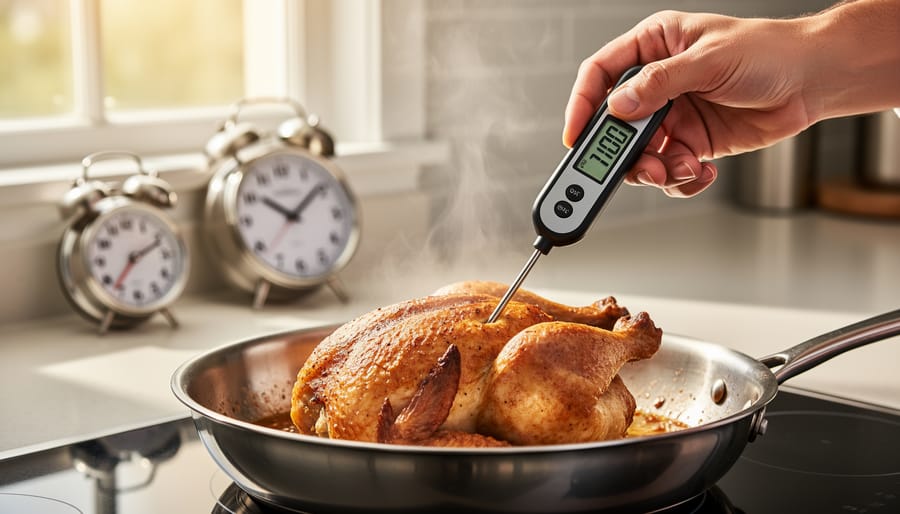
While cooking time per pound provides a helpful roadmap, your meat thermometer delivers the final verdict on doneness. Insert the thermometer into the thickest part of the inner thigh without touching bone, the turkey is ready when it reaches 170°F for unstuffed or 180°F for stuffed birds. If you’ve added stuffing, check its temperature separately in the center of the cavity; it must reach 165°F to be safe.
Beyond temperature readings, visual and texture cues confirm your turkey’s readiness. The skin should turn a rich golden-brown, and when you pierce the thigh, the juices should run clear rather than pink. The drumsticks will feel loose in their sockets and move easily when wiggled. These indicators work together with your thermometer reading to paint a complete picture.
The 20-minute resting period after you remove the turkey from the oven isn’t optional, it’s essential. During this time, the internal juices redistribute throughout the meat rather than spilling onto your cutting board, and carryover cooking adds a few more degrees to the internal temperature. Tent the turkey loosely with foil to keep it warm while it rests.
If your thermometer shows the turkey is done earlier than expected, remove it immediately and begin resting. Overcooking guarantees dry meat. Conversely, if timing suggests it’s done but the thermometer disagrees, continue roasting and check every 15 minutes. You can prevent dry meat by monitoring temperature closely rather than relying solely on the clock. If the breast is browning too quickly while the thigh temperature lags, cover just the breast area with foil and continue cooking until the thigh reaches target temperature.
Frequently Asked Questions
Can you cook turkey at different temperatures?
Yes, though 350°F is the standard for even cooking and food safety. Higher temperatures (375-425°F) brown the skin faster but risk drying out the breast, while lower temperatures extend cooking time significantly and may compromise food safety if not monitored carefully with a thermometer.
How does altitude affect cooking time?
At higher elevations (above 3,000 feet), turkeys cook more slowly due to lower air pressure and decreased oven efficiency. Add roughly 25 percent more cooking time and always verify doneness with a thermometer rather than relying solely on timing charts.
Should you cover the turkey the whole time?
No. Start uncovered or with loose foil over the breast for the first hour, then expose the skin for the final portion of roasting to achieve golden-brown color. If the breast browns too quickly, tent it lightly with foil while the thighs finish cooking.
How do you prevent dry breast meat?
Start the turkey breast-side up, avoid overcooking by checking temperature early (aim for 170°F in the thigh), and let it rest for the full 20 minutes before carving. Basting with herb-infused oil or broth every 45 minutes adds moisture without excessive fat.
Can you cook a frozen turkey?
Technically yes, but it requires 50 percent longer cooking time and complicates proper seasoning and stuffing. For food safety and quality, thaw your turkey completely in the refrigerator beforehand, plan one day per four pounds of turkey weight.
How does turkey size affect cooking efficiency for meal planning?
Larger turkeys (14 pounds and up) provide better value per pound and more leftovers for healthy meal planning throughout the week. However, they require longer cooking times and more oven space, so balance size with your schedule and refrigerator capacity when selecting your bird.
These questions reflect real challenges home cooks face when timing their holiday turkey. The key takeaway: while timing per pound gives you a solid starting estimate, your thermometer and proper technique matter far more than sticking rigidly to the clock. Adjust for your specific oven, altitude, and turkey characteristics, and you’ll consistently achieve juicy, safely cooked results that make the centerpiece of your celebration memorable.
Mastering turkey cooking time per pound transforms what can feel like a high-stakes culinary challenge into a confident, repeatable process. Armed with the 15-18 minutes per pound guideline for unstuffed birds and 18-22 minutes for stuffed, plus your trusty meat thermometer, you’re equipped to deliver perfectly cooked turkey that aligns with both celebration tradition and Cloud 9’s wellness-focused approach to food.
This knowledge extends beyond a single holiday meal. Apply these timing principles while adapting recipes to suit your dietary preferences, swap conventional basting fats for herb-infused oils, experiment with CBD-enhanced seasonings, or adjust salt levels to match your health goals. The foundation remains the same: proper timing, accurate temperature verification, and that crucial 20-minute rest period.
Smart meal planning means your turkey investment serves you well beyond the main event. Leftover turkey becomes the cornerstone of nutritious, budget-conscious meals throughout the week, from protein-rich salads to nourishing bone broth. Explore Cloud 9’s collection of post-holiday recipes that turn celebration surplus into everyday wellness wins, proving that mindful cooking starts with technique and extends to thoughtful planning.