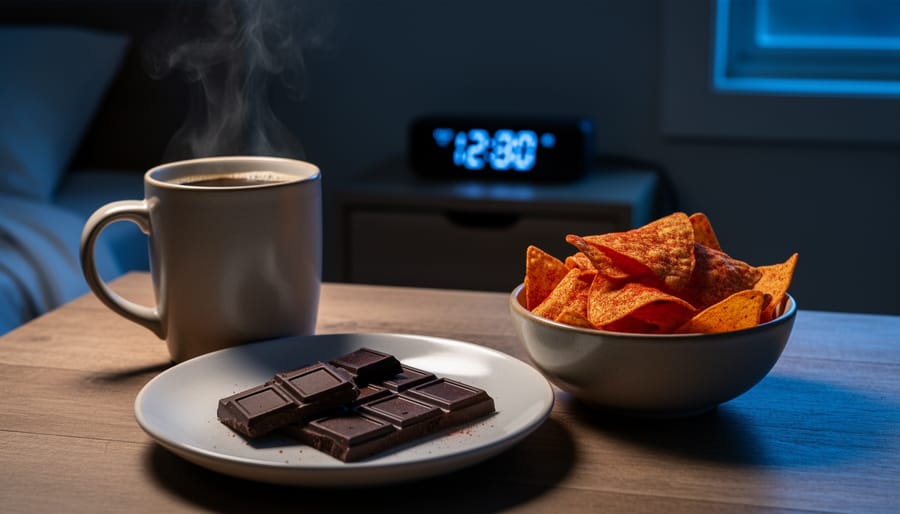
If you’re tossing and turning at night, your dinner plate might be the culprit. Seven categories of common foods disrupt sleep by stimulating the nervous system, triggering digestive distress, or spiking blood sugar levels that interfere with your body’s natural sleep-wake cycle. The biggest offenders include caffeinated beverages and dark chocolate, high-fat heavy meals, spicy foods, alcohol, high-sugar foods and refined carbohydrates, acidic and tomato-based foods, and processed meats loaded with sodium.
Understanding which foods sabotage your sleep helps you make smarter choices, especially during the hours leading up to bedtime. The science is clear: what you eat and when you eat it directly impacts how quickly you fall asleep and the quality of rest you get. Many Canadians struggling with sleep issues don’t realize their evening snack or nightcap is working against them.
The good news? Small dietary adjustments can lead to dramatic improvements in sleep quality, often within just a few days. You don’t need to eliminate these foods entirely, but timing matters significantly. By learning which ingredients to avoid in the evening hours and discovering budget-friendly alternatives that actually promote rest, you can transform your nights without overhauling your entire diet or spending a fortune at specialty stores.
How We Identified Sleep-Disrupting Foods
We built this list by combining established nutritional research with real-world feedback from our wellness consultations at Cloud 9 Restaurant. Each food category made the cut because it demonstrates one or more documented mechanisms that interfere with quality sleep: disrupting your body’s natural circadian rhythm, stimulating rather than calming your nervous system, slowing digestion when your body should be winding down, or creating physical discomfort that wakes you during the night.
Current sleep science in 2026 continues to highlight how specific compounds in foods interact with neurotransmitters, hormones like melatonin, and core body temperature regulation. We cross-referenced peer-reviewed studies on sleep architecture with practical observations from guests who’ve shared their experiences. Many diners have reported better rest after adjusting their evening meal choices, particularly when they shifted heavy, stimulating, or acidic foods to earlier in the day.
We also considered economic accessibility. These aren’t obscure foods you’d struggle to identify. They’re common evening choices that many people consume without realizing the connection to their restless nights. Our goal is to help you make informed swaps that support both your sleep and your budget.
1. Caffeinated Beverages and Dark Chocolate
Coffee, energy drinks, caffeinated teas, and even that square of dark chocolate you enjoy after dinner can sabotage your sleep hours after you consume them. Caffeine works by blocking adenosine receptors in your brain, adenosine is the neurotransmitter that builds up throughout the day and signals your body when it’s time to rest. When caffeine occupies those receptors, your brain can’t receive the natural “I’m tired” message, leaving you wired when you should be winding down.
Here’s the catch: caffeine has a half-life of five to six hours. That means if you drink a cup of coffee at 4 PM, half the caffeine is still circulating in your system at 10 PM. A quarter remains active at 4 AM. Your morning cappuccino is fine, but that 3 PM pick-me-up or after-dinner espresso directly interferes with falling asleep and staying asleep.
Dark chocolate surprises many people. A 100-gram bar can contain 40-80 milligrams of caffeine, roughly the same as a weak cup of tea. The darker the chocolate, the higher the caffeine content.
For better sleep, stop consuming caffeinated beverages by early afternoon, noon if you’re particularly sensitive. Switch to herbal teas like chamomile or rooibos in the evening. You’ll save money too: brewing tea at home costs pennies compared to $5 specialty coffee drinks, and the ritual can become just as satisfying once you adjust.
2. High-Fat, Heavy Meals
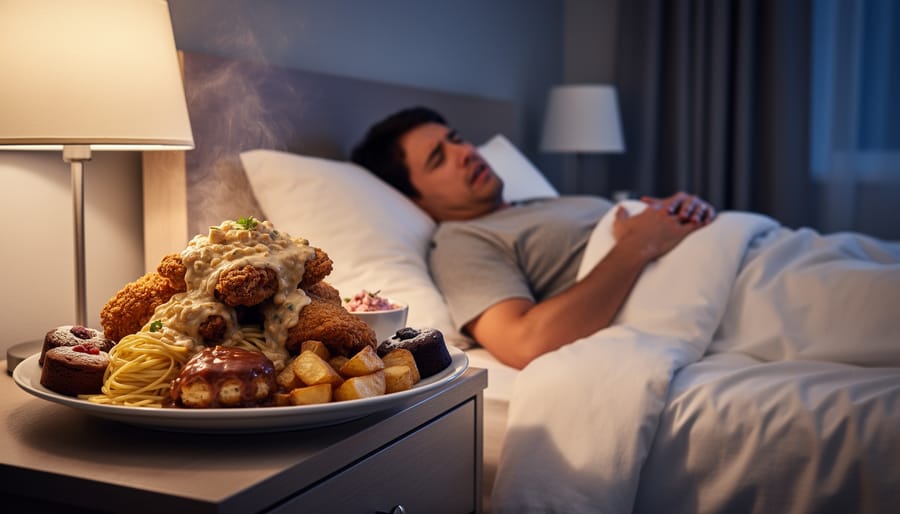
That indulgent plate of fettuccine alfredo or crispy fried chicken might satisfy your taste buds, but your sleep will pay the price. High-fat, heavy meals demand significantly more digestive effort than lighter fare, and when you lie down within a few hours of eating them, your body struggles to process all that richness while horizontal.
Fat slows gastric emptying, meaning your stomach takes much longer to break down and move food into your intestines. A fatty meal can sit in your stomach for four to six hours, compared to two to three hours for a lighter option. When you recline before that process finishes, stomach acid can more easily flow back into your esophagus, triggering heartburn and reflux that jolt you awake or prevent you from falling asleep comfortably.
We’ve observed this pattern repeatedly at Cloud 9 Restaurant: guests who enjoy our richer evening specials often mention they need more time before bed, while those choosing grilled fish or vegetable-forward dishes report easier transitions to sleep. Deep-fried appetizers, creamy carbonara, heavily marbled steaks, and anything swimming in butter or cheese sauce all fall into this category.
The good news? You don’t need to abandon flavorful dinners entirely. Timing matters most, finish heavy meals at least three to four hours before bed. Better yet, save the indulgent dishes for lunch and opt for lighter proteins and roasted vegetables in the evening. This approach lets you eat healthy on a budget while improving sleep, since simpler preparations with lean proteins and seasonal produce cost less than cream-heavy sauces and premium cuts.
3. Spicy Foods
Spicy foods, think jalapeños, cayenne-heavy dishes, fiery curries, and hot sauces, can turn your night’s rest into a restless affair. The culprit is capsaicin, the compound that gives peppers their characteristic heat. When you consume capsaicin close to bedtime, it raises your core body temperature at precisely the wrong moment. Your body naturally cools down in the evening to signal sleep readiness, and this temperature drop is essential for falling asleep quickly and staying asleep through the night.
Beyond the temperature issue, spicy foods can irritate your digestive system, causing heartburn or indigestion that intensifies when you lie down. That burning sensation in your chest isn’t conducive to drifting off peacefully.
This doesn’t mean you need to abandon the flavors you love. If spicy cuisine is part of your cultural dining tradition or personal preference, simply adjust your timing. Enjoy your spiciest meals at lunch or early dinner, giving your body at least four hours to process the heat before bed. At Cloud 9 Restaurant, we’ve seen guests who shifted their curry nights to midday report better sleep without sacrificing the dishes they cherish.
For evening meals, opt for milder seasonings like herbs, garlic, or ginger, which add flavor complexity without the sleep-disrupting heat.
4. Alcohol
Many people reach for a glass of wine or a nightcap believing it will help them drift off faster. While alcohol does make you drowsy initially, it’s one of the worst things you can consume before bed if you’re aiming for restorative sleep.
Alcohol disrupts your sleep architecture in several ways. First, it suppresses REM sleep during the first half of the night, the stage where your brain processes emotions and consolidates memories. As your body metabolizes the alcohol (typically after three to four hours), you experience a rebound effect. Your sleep becomes fragmented, lighter, and you’re more likely to wake up repeatedly in those early morning hours, often unable to fall back asleep easily.
The diuretic effect compounds the problem. Alcohol signals your kidneys to produce more urine, meaning you’ll likely wake up needing the bathroom. This interrupts your sleep cycles and makes it harder to achieve the deep, uninterrupted rest your body needs. You might also wake up with a dry mouth or mild dehydration symptoms that further disturb your sleep.
Beyond the physiological disruption, alcohol can relax the muscles in your throat, worsening snoring or sleep apnea symptoms. It also interferes with your body’s natural temperature regulation, similar to how spicy foods or rich desserts like chocolate pudding cake or jelly doughnuts can, making it harder to maintain the cool core temperature essential for quality sleep.
If you enjoy an evening drink, try finishing it at least three hours before bed to give your body time to metabolize the alcohol before sleep.
5. High-Sugar Foods and Refined Carbohydrates
That late-night bowl of cereal or post-dinner dessert might feel comforting, but high-sugar foods and refined carbohydrates can sabotage your sleep in ways you don’t expect. When you eat sugary treats or white bread close to bedtime, your blood glucose spikes rapidly, triggering a surge of insulin. This spike provides a brief energy boost, exactly what you don’t need when trying to wind down.
What happens next is the real problem. Within an hour or two, your blood sugar crashes just as hard as it rose. This sudden drop signals your body to release stress hormones like cortisol and adrenaline, which can jolt you awake in the middle of the night. You might not even realize why you’re suddenly wide-eyed at 2 a.m., but that bedtime cookie is often the culprit.
Refined carbs like white bread, pastries, and sugary cereals digest quickly and lack the fiber that would otherwise slow glucose absorption. The result is the same roller-coaster effect disrupting your sleep cycles.
Instead, reach for complex carbohydrates paired with a bit of protein, whole grain crackers with almond butter, plain Greek yogurt with berries, or a small banana with a handful of nuts. These options stabilize blood sugar through the night without the crash, and they’re budget-friendly staples you probably already have in your kitchen.
6. Acidic and Tomato-Based Foods
Acidic foods might add a bright punch to dinner, but they’re notorious for disrupting sleep when consumed too close to bedtime. Citrus fruits (oranges, grapefruits, lemons), tomato-based pasta sauces, vinegar-heavy salad dressings, and acidic marinades can all trigger acid reflux or heartburn when you lie down. The problem intensifies at night because gravity no longer helps keep stomach acid where it belongs, once you’re horizontal, that acid can creep up into your esophagus, causing burning discomfort that keeps you awake or jolts you from sleep.
Tomato sauce is especially tricky because it’s both acidic and often paired with heavy, late dinners. If you love Italian cuisine, try cream-based sauces with lower acidity, or opt for roasted vegetable toppings instead. For salads, swap vinaigrettes for tahini-based or yogurt dressings that won’t aggravate your stomach. And if you’re craving citrus, have it at lunch rather than dinner.
The good news: plenty of foods help sleeping without the acid punch, think roasted root vegetables, mild herbs like basil and parsley, and gentle seasonings that deliver flavor without the reflux risk. These swaps keep your meals interesting while protecting your rest.
7. Processed Meats and High-Sodium Foods
Processed meats like bacon, salami, pepperoni, and deli ham pose a double threat to quality sleep. These foods contain tyramine, an amino acid that stimulates the release of norepinephrine, a brain chemical that increases alertness and can keep you wired when you should be winding down. The aging and curing processes that preserve these meats concentrate tyramine levels, making them particularly problematic in the evening hours.
Beyond the tyramine issue, processed meats and salty snacks are loaded with sodium. A single serving of deli turkey can pack 500-1000mg of sodium, while a handful of pretzels or chips easily reaches similar levels. Excess sodium triggers water retention, causing uncomfortable bloating and forcing your kidneys into overdrive. You’ll find yourself waking up multiple times to use the bathroom, fragmenting your sleep cycles just when your body needs uninterrupted rest.
From an economic meal planning perspective, fresh whole foods offer better value than expensive packaged meats. A rotisserie chicken costs less per serving than premium deli selections and won’t sabotage your sleep. When you’re craving something savory in the evening, reach for unsalted nuts, fresh vegetables with hummus, or a small portion of grilled chicken seasoned with herbs instead of salt-heavy prepared options.
Better Choices: What to Eat Instead
Knowing what to avoid is only half the equation. The good news? Simple swaps can transform your evening routine without breaking the bank or sacrificing satisfaction.
Instead of reaching for that late-night coffee or dark chocolate bar, try these sleep-friendly alternatives:
- Chamomile or passionflower tea, naturally caffeine-free and contains apigenin, which promotes relaxation
- Almonds or pumpkin seeds, rich in magnesium and tryptophan, both essential for melatonin production
- Whole grain toast with almond butter, complex carbs paired with healthy fats stabilize blood sugar through the night
- Bananas, high in potassium and magnesium, helping muscles relax
- Tart cherry juice, one of the few natural sources of melatonin
- Plain Greek yogurt with a drizzle of honey, contains calcium that helps the brain use tryptophan effectively
For those exploring CBD as part of their wellness routine, Health Canada’s 2026 regulations now permit CBD-infused beverages and edibles with clear dosage labeling. Many find that a low-dose CBD tea or tincture taken an hour before bed supports their wind-down ritual, though individual responses vary. These options typically cost less than a nightly glass of wine and won’t disrupt your sleep architecture.
The key is choosing whole, minimally processed foods that work with your body’s natural sleep mechanisms rather than against them.
Common Questions About Foods and Sleep
How long before bed should I stop eating?
Aim to finish your last substantial meal at least three hours before sleep, giving your body time to complete most of the digestive process. Light snacks can be fine up to an hour before bed if they’re sleep-friendly options like a small handful of nuts or a banana.
Can I ever have these foods, or are they completely off-limits?
You don’t need to eliminate these foods entirely. The key is timing and awareness, enjoy your coffee at breakfast, have that spicy curry at lunch, or savor dark chocolate as an afternoon treat. It’s what you consume in the three to four hours before bed that matters most for sleep quality.
Does portion size make a difference?
Absolutely. A small piece of cheese might not disrupt your sleep, while a large portion of the same food could cause reflux or digestive discomfort that keeps you awake. Your body’s tolerance varies, so pay attention to how different quantities affect your rest.
What if I work night shifts and my eating schedule is reversed?
The same principles apply regardless of when you sleep. Avoid stimulating, heavy, or acidic foods in the three hours before your designated sleep time, whether that’s 2 PM or 2 AM. Your body still needs the same digestive and temperature conditions to rest well.
Why do some foods bother my sleep but not my partner’s?
Individual tolerance varies based on metabolism, digestive health, caffeine sensitivity, and even genetics. Someone might handle a late espresso fine while another person stays wired for hours. Track your own patterns rather than comparing yourself to others.
These questions reflect what we hear most often from guests at Cloud 9 Restaurant when discussing evening dining choices. The reality is that rigid rules rarely work in daily life. You might travel, dine out with friends, or simply crave something on the avoid list. When that happens, be strategic about timing and portions, then observe how your body responds. Over time, you’ll develop an intuitive sense of what works for your unique system and what consistently interferes with your rest.
Your sleep quality doesn’t have to be at the mercy of what’s in your fridge. By avoiding caffeine, heavy fats, spicy dishes, alcohol, high-sugar treats, acidic foods, and processed meats in the three to four hours before bed, you’re giving your body the best chance to rest deeply and wake refreshed. Everyone’s tolerance is different, so experiment to find what works for you, you might discover that a small portion of dark chocolate at 7 p.m. is fine, while tomato sauce after 8 p.m. keeps you up all night.
At Cloud 9 Restaurant, we believe wellness isn’t about perfection or deprivation, it’s about intentional choices that honor your body’s needs. Small dietary shifts, like choosing when and what you eat in the evening, create ripple effects that improve not just your sleep but your energy, mood, and overall health. You don’t need to overhaul your entire diet tonight. Pick one change from this list and try it for a week. Your future self, waking up genuinely rested, will thank you.